Table of Contents
- Current Diamonds Price Chart Per Carat
- How to Calculate The Diamond Price Per Carat
- Free Independent Diamond Advice
- Current Diamond Prices Per Shapes
- Price of 2 Carat Diamonds
- Today everything changes.
- Total Cost of a Diamond = Carat Weight x Price per carat
- Diamond Prices Categories
- Weight category
- Cutting
- Rarity
- How Much Is A Diamond Worth?
- Diamond Prices And The 4C's
- The 5C's: Certifications
- Tips To Buy a Diamond
- How to Verify You’re Getting a Fair Price
- What The Industry Says
- Other factors that affect diamond pricing
- Who we are - CEO Nissan Perla's Word
- What we do
- Get A Free Price Estimation For Your Diamond
- Diamond Wholesale and Retail Prices
- Diamond Prices Frequently Asked Questions
How to Calculate The Diamond Price Per Carat
To figure out the price of a diamond per carat, you first need to understand how carats work. A carat is a unit of weight for diamonds, and each carat equals 200 milligrams. So, the more carats a diamond has, the heavier it is. But pricing isn’t just about weight. Factors like the diamond’s cut, clarity, and color also play a big role in its price per carat. This makes the calculation more complex. To make it easier to understand, you can look at an example calculation that shows how these factors affect the final price per carat.
Current Diamond Prices Per Shapes
As of November 2026, a 0.5-carat diamond’s price can range from $400 to $900, depending on its cut, clarity, color, and shape.
Here are average price ranges for different shapes, for colors F to J and clarities VS1 to SI2:
- Round Brilliant Cut: $400 to $900
- Princess Cut: $500 to $900
- Cushion Cut: $500 to $900
- Emerald Cut: $500 to $900
- Oval Shape: $500 to $900
- Radiant Cut: $500 to $900
- Asscher Cut: $500 to $900
- Marquise Cut: $500 to $900
- Heart Shape: $500 to $900
- Pear Shape: $500 to $900
Price of 2 Carat Diamonds
The price range for 2-carat diamonds is higher, ranging from $10,100 to $28,000 depending on their cut, clarity, color, and shape.
Here are the average prices for common cuts:
- Round Brilliant Cut: $10,100 to $28,000
- Princess Cut: $10,100 to $24,000
- Cushion Cut: $10,100 to $24,000
- Emerald Cut: $10,100 to $24,000
- Oval Shape: $10,100 to $24,000
- Radiant Cut: $10,100 to $24,000
- Asscher Cut: $10,100 to $24,000
- Marquise Cut: $10,100 to $24,000
- Heart Shape: $10,100 to $24,000
- Pear Shape: $10,100 to $24,000
Prices For Engagement Rings
Diamond prices can vary widely based on the carat weight. Here’s a sample table based on prices as of November 2026.
| Carat | Average Prices | Weight | Size (mm) | Best For |
| 0.5 Carat | $400 – $900 | 100 mg | 5.0 – 5.2 | Balanced size and affordability, suitable for elegant, delicate jewelry pieces. |
| 1 Carat | $1,800 – $5,000 | 200 mg | 6.4 – 6.5 | Popular choice for engagement rings, noticeable presence without being overly large. |
| 1.5 Carat | $4,900 – $13,000 | 300 mg | 7.3 – 7.5 | Larger appearance without a substantial cost leap compared to 2-carat diamonds. |
| 2 Carat | $10,100 – $28,000 | 400 mg | 8.0 – 8.2 | Significantly larger and impressive, often chosen for standout size and brilliance. |
| 3 Carat | $26,400 – $70,800 | 600 mg | 9.2 – 9.3 | Provides a very large, impressive appearance for eye-catching pieces. |
| 3.5 Carat | $30,800 – $82,600 | 700 mg | 9.5 – 9.7 | Offers significant size, suitable for special jewelry pieces. |
| 4 Carat | $44,800 – $131,200 | 800 mg | 10.0 – 10.1 mm | Ideal for those seeking a luxurious, statement-making diamond. |
| 5 Carat | $68,000 – $216,000 | 1,000 mg | 11.0 – 11.1 | Extremely large and impressive, often reserved for very special occasions or investments. |
| 6 Carat | $87,800 – $287,500 | 1,200 mg | 11.6 – 11.7 | Rare and luxurious, offering substantial presence and brilliance. |
| 7 Carat | $109,800 – $368,500 | 1,400 mg | 12.2 – 12.3 | Exceptionally rare and valuable, chosen for its grandeur and rarity. |
| 8 Carat | $133,800 – $458,900 | 1,600 mg | 12.8 – 12.9 | Unparalleled size and brilliance, coveted for high-end jewelry. |
| 9 Carat | $159,800 – $558,700 | 1,800 mg | 13.3 – 13.4 | Extremely rare and valuable, often chosen for significant size and impressive appearance. |
| 10 Carat | $188,000 – $668,000 | 2,000 mg | 14.0 – 14.1 | Symbol of ultimate luxury and exclusivity, offering exceptional size and brilliance. |
Certain carat weights are particularly popular for engagement rings. Knowing these price ranges can help you set a realistic budget for your engagement ring:
- 1 Carat. Prices usually fall between $1,800 and $5,000 for high-quality diamonds.
- 1.5 Carat. Expect to pay around $4,900 to $13,000.
- 2 Carat. Prices can range from $10,100 to $28,000.
- 3 Carat. High-quality stones can cost between $26,400 and $70,800.
Today everything changes.
Now you can read all the necessary information and reach experts online, which neglects the uncertainty risks completely. And these days, the basic principle of buying a great diamond became simple: to know your own mind and to make certain you’ll get what you asked.
But even if you’re clear with your desires and found a reliable diamond partner, the price may still remain an open question. So, here the question of how to get the best diamond possible and read the price list correctly.
- How to know what you really need? Learn the exact aspects of your diamond!.
- How to get what you need? Ensure your seller will get the most valuable, radiant, and massive diamond for your budget!
Let us help you with reading the diamond price list - once and forever.
Total Cost of a Diamond = Carat Weight x Price per carat
To figure out the total cost of a diamond, you multiply the carat weight by the price per carat. For example, if a diamond is priced at $2,000 per carat and you choose a 2.5-carat diamond, the cost would be $2,000 times 2.5, which equals $5,000. This same approach works for diamonds with specific characteristics. Let’s say you pick a diamond ring with VVS1 clarity, an oval cut, and D color, priced at $31,000 per carat. If the diamond weighs 2 carats, the total cost would be $31,000 times 2, which comes to $62,000.
When buying or selling an engagement ring, it’s essential to pay close attention to the carat weight because it has a significant impact on the total cost. While factors like color, cut, and clarity are important, carat weight plays a bigger role in determining the price. However, this principle doesn’t always apply to larger diamonds, where other factors might become more important in influencing the overall cost.

Diamond Prices Categories

Weight category
Diamonds are measured in carats, and jewelers use very precise scales to get an accurate weight. The weight of a diamond is a big factor in its price. Bigger diamonds are rarer and need more work to shape, making them more valuable. For example, a one-carat diamond usually costs more per carat than a half-carat diamond if everything else, like cut, color, and clarity, is the same.
However, the price doesn’t just double with the weight. As the carat weight goes up, the price per carat increases a lot more because larger diamonds are so rare. For instance, a two-carat diamond can cost much more than twice the price of a one-carat diamond of similar quality.
When you are choosing a diamond, it’s important to think about the balance between carat weight and other factors like cut, color, and clarity. Sometimes, picking a diamond with a slightly lower carat weight can let you choose a higher quality in other areas without making the diamond look much smaller. This way, you can get a beautiful diamond that offers good value for its price.

Cutting
How a diamond is cut plays a big role in determining its price. You might find a diamond with a lower carat weight but an excellent cut that costs more than a slightly heavier diamond with a poor cut. This is because the cut of a diamond affects how good it looks.
The cut grade includes factors like polish, symmetry, and proportions. An excellent cut means the diamond has been shaped to the best possible proportions and angles, making it reflect light beautifully and sparkle a lot. On the other hand, a poor cut means the diamond might be cut too deep or too shallow, which makes it lose its sparkle and look dull.
So, the cut can greatly change a diamond’s appearance and value. A well-cut diamond will look more brilliant and be more valuable, even if it weighs less than a poorly cut diamond. This shows how important the cut is when determining a diamond’s overall beauty and price.

Rarity
A rarity in diamonds means how uncommon certain features are. This includes things like carat, cut, color, and clarity, which are known as the 4Cs, as well as the overall quality of the diamond. Natural diamonds form under very specific geological conditions, which don’t happen every day. This makes high-quality diamonds quite rare.
Larger diamonds are even rarer and more valuable because they are harder to find and cut without losing much weight. Similarly, diamonds with high clarity grades, which have fewer inclusions and blemishes, are rare and therefore more valuable.
Color is another factor in rarity. While many people seek colorless diamonds, fancy-colored diamonds, like blue, pink, or green, are extremely rare and can be even more valuable.
Collectors and investors often look for these rare diamonds because they are unique and can bring high returns. If you want to invest in a diamond, choosing a high-quality one is usually a good idea, as these diamonds tend to go up in value over time.
How Much Is A Diamond Worth?
The price of a diamond can change a lot based on different factors. For example, a diamond with an excellent cut, D color, and VVS1 clarity might cost $8,000 per carat. If you choose a diamond with an E color grade, which is slightly lower but still high-quality in other ways, the price per carat might be $7,500. Retailers often add a markup, which can make the price go up quite a bit. For instance, with a 50% markup, the price of a $7,500 per carat diamond could increase to $11,250.
Buying from an online store that sells loose diamonds might help you find a better deal, with prices closer to $8,750, which is closer to what you’d pay at a wholesale level. This example shows how the final cost of a diamond can vary based on its quality, color grade, and where you buy it. Understanding these factors can help you find a good deal and make a smarter choice when buying a diamond.
There's the table that demonstrates to you the exact differences between a 2 carat diamond price list and a 3 carat diamond price list.
| i.f. | vvs1 | vvs2 | vs1 | vs2 | si1 | si2 | |
|---|---|---|---|---|---|---|---|
| D | 34785 | 29067 | 24302 | 20966 | 17631 | 14295 | 11436 |
| E | 27550 | 24700 | 21850 | 19000 | 16150 | 13300 | 10450 |
| F | 24047 | 22161 | 19803 | 16974 | 15088 | 12259 | 9713 |
| G | 19929 | 18031 | 16133 | 14710 | 13286 | 11388 | 9300 |
| H | 16167 | 15216 | 14265 | 12839 | 11412 | 10461 | 8939 |
| I | 11838 | 11364 | 10891 | 10417 | 9944 | 8997 | 8050 |
| J | 10059 | 9580 | 9101 | 8622 | 8143 | 7664 | 7185 |
| K | 9073 | 8118 | 7354 | 6876 | 6399 | 5921 | 5539 |
| i.f. | vvs1 | vvs2 | vs1 | vs2 | si1 | si2 | |
|---|---|---|---|---|---|---|---|
| D | 55274 | 47650 | 39073 | 34308 | 28590 | 20966 | 16678 |
| E | 43700 | 39900 | 34675 | 29925 | 25650 | 19000 | 15675 |
| F | 38192 | 34891 | 30648 | 26876 | 22632 | 17446 | 14617 |
| G | 31317 | 29419 | 26572 | 23725 | 20404 | 16133 | 13286 |
| H | 23775 | 22349 | 20922 | 19496 | 16643 | 14265 | 11888 |
| I | 18940 | 17520 | 16573 | 15626 | 13732 | 12311 | 10417 |
| J | 14849 | 13891 | 13412 | 12454 | 11496 | 10538 | 9580 |
| K | 12415 | 11460 | 10983 | 10028 | 9550 | 8786 | 8118 |
In addition to clarity, several other factors remain stable in evaluating diamond prices. What we mean here are 4C’s. We encourage you learn them to check the knowledge and professionalism of your diamond expert.
Diamond Prices And The 4C's

Even though many factors affect diamond prices, the basic pricing models are fairly standard. This means that someone who understands the key aspects of a diamond, i.e., carat, color, clarity, and cut, can give a good estimate of its price. However, getting the exact value of a diamond is more complex and usually requires the expertise of a professional who is familiar with current market trends.
Diamond experts keep up with the latest news and trends in the industry. They track changes in the diamond price charts and notice how shifts in demand for certain qualities can affect prices. For example, if more people start wanting diamonds with a particular clarity or color, it can make those diamonds more expensive. Similarly, the popularity of certain cuts, like princess or cushion, can also change prices. While high-clarity diamonds are always in demand, trends like the rising popularity of pink diamonds show how market preferences can impact prices. Staying informed about these trends can help in understanding how diamond prices may change over time.
Carat
Carat simply refers to the weight of a diamond, with one carat equaling 200 milligrams. The term “carat” comes from the carob seed, which was historically used by gem traders as a weight reference because of its consistent size.
However, carat weight alone does not determine the price of a diamond. Even if two diamonds have the same carat weight, their prices can vary significantly due to other factors like cut, color, and clarity. For instance, one diamond might be cut perfectly, have a beautiful color, and be almost flawless, making it much more valuable than another diamond of the same weight but with a less impressive cut, color, or clarity.

Color
Color in diamonds refers to any shade other than white. Colorless diamonds are prized because they let more light through, which makes them sparkle more. So, the less color a diamond has, the more valuable it tends to be.
The Gemological Institute of America (GIA) uses a color grading scale to rate diamonds, ranging from D to Z. Diamonds rated D are completely colorless and are the most valuable. Grades E and F are also colorless but may have tiny traces of color that are hard to see. Diamonds with grades G to J are near-colorless, meaning they have very little color and still look almost as brilliant.
Diamonds graded K to Z show more noticeable color, which can affect their sparkle and make them less valuable. Understanding this color scale is important because it plays a big role in determining a diamond’s price.

Clarity
Clarity in diamonds refers to any imperfections inside or outside the stone. Internal flaws are called inclusions, while external ones are called blemishes. These imperfections can impact how well a diamond sparkles, so clarity is an important factor in deciding a diamond’s quality and price.
Diamonds are graded for clarity on a scale created by the Gemological Institute of America (GIA). This scale ranges from Flawless (FL), meaning no visible imperfections, to Included (I3), where flaws are easily seen. Diamonds with fewer and less noticeable imperfections get higher clarity grades and are worth more.
High-clarity diamonds are rare, which is why they tend to be more expensive. A Flawless diamond, for example, has no visible flaws even under magnification, making it very valuable. So, if you are looking for a diamond with excellent clarity, be prepared to pay more, as these diamonds are less common and highly prized.

Cut
The cut of a diamond is about how well it has been shaped and faceted, and it’s different from the diamond’s physical shape, like whether it’s oval or pear-shaped. The cut affects how the diamond interacts with light. A diamond with a good cut reflects light from one facet to another and then sends it out through the top, making the stone sparkle brightly.
Even though people often focus on color and clarity, the cut is very important for a diamond’s overall beauty and value. A diamond might have great color and clarity, but if it is cut poorly, it can look dull. The Gemological Institute of America (GIA) grades diamond cuts from excellent to poor. This grading considers how well the diamond’s facets are arranged, how symmetrical the cut is, and how well it is polished. All these factors determine how well the diamond sparkles and shines.

The 5C's: Certifications
Certifications play a crucial role in buying a diamond and are often called the “fifth C” in addition to the traditional 4Cs: carat, cut, color, and clarity. These certificates come from reputable organizations like the GIA (Gemological Institute of America), AGS (American Gem Society), IGI (International Gemological Institute), and HRD Antwerp. They provide an unbiased and thorough assessment of a diamond’s quality and authenticity, which is especially important for diamonds priced above $1,000.
Among these organizations, the GIA and AGS are particularly well-regarded. A GIA certificate, for example, offers detailed information about the diamond’s features, including the 4Cs, fluorescence, symmetry, and precise measurements. It also includes diagrams showing any inclusions or blemishes present in the diamond. Each GIA certificate is assigned a unique report number, and buyers receive a hard copy of this certificate when they purchase the diamond. Additionally, GIA maintains an online database where you can access a digital copy of the certificate at any time. This ensures that you have all the necessary information to verify the diamond’s quality and make an informed purchase, adding an extra layer of confidence to your investment.

Tips To Buy a Diamond
Buying a diamond is a major investment and can be a special way to celebrate an important moment. Here are some useful tips to help you make the best choice:
- Do Your Homework: Take some time to understand the different qualities and prices of diamonds before making a purchase. Learn about the 4Cs (carat, cut, color, and clarity), which will help you judge whether a diamond is worth its price.
- Compare Prices: It’s a good idea to look at prices from various retailers. Online stores often have lower prices because they don’t have the same expenses as physical stores. Comparing prices can help you find a better deal.
- Buy Certified: Make sure the diamond comes with a certificate from a trusted gemological lab like the GIA or AGS. This certification confirms that the diamond is genuine and provides details about its quality.
- Consider Pre-Owned Diamonds: Buying a pre-owned diamond can be a smart way to save money. These diamonds can still be high-quality, as long as they are certified by reputable institutions.
- Don’t Hesitate to Negotiate: Many retailers are open to negotiating the price, especially if you are buying a high-value diamond or multiple items. It’s worth asking for a better deal.
By following these tips, you will be better prepared to make an informed decision and find a diamond that fits your budget and preferences.
How to Verify You’re Getting a Fair Price
If you want to make sure you’re getting a fair price for a diamond, here are some simple tips to follow:
- Check the Certification: Before buying, make sure the diamond has a certificate from a respected organization like the GIA or AGS. This certificate confirms that the diamond has been properly evaluated for quality, so you know what you are getting matches what the seller says.
- Compare Prices: Look at prices from different dealers to see if the price you’re considering is reasonable. Many reputable sellers list their prices online or in their stores. Comparing these prices with the diamond you’re interested in can help you decide if it’s a fair deal.
- Get an Independent Appraisal: If you are still unsure, you can have the diamond evaluated by an independent expert, like a gemologist or experienced jeweler. They can check the diamond’s quality and value, giving you peace of mind.
Following these steps will help you ensure you’re getting a fair price and make a more informed purchase.
What The Industry Says
The diamond industry uses a few key tools to help determine prices and trends:
- Rapaport Price List: This is the main guide for diamond pricing. It’s updated every week and shows prices based on the diamond’s quality and size. The Rapaport Price List is a standard tool that many in the industry use to find out the current market value of diamonds.
- IDEX Online: The IDEX Diamond Retail Benchmark provides a detailed look at current retail diamond prices. It helps shoppers see the latest price trends and understand how diamond prices are changing.
- Diamond Search Engine: This website is a useful resource for first-time buyers. It offers an easy way to see diamond prices and compare different options.
These tools are important for both buyers and sellers to keep up with the market and make smart decisions when dealing with diamonds.
Other factors that affect diamond pricing
When choosing a diamond, it’s not just about the size or quality of the stone. Another key factor to consider is the diamond’s history, which can significantly affect its value. Many diamonds are mined in specific regions, and some of these areas, particularly in Africa, have a troubling past. In the past, diamonds from these regions were often associated with severe human rights abuses, where armed groups forced local people into dangerous working conditions. This dark history has led to many buyers seeking diamonds that are ethically sourced and free from such conflict.
Ethically sourced diamonds, sometimes called “conflict-free” diamonds, are those that come from mines where fair and humane practices are followed. These diamonds might be more expensive due to the higher standards of sourcing and labor, but they are valued for their positive impact and ethical background. Some people even choose not to buy diamonds at all and opt for other gemstones or alternatives. Understanding the story behind a diamond helps ensure that your purchase aligns with your values and supports responsible practices in the industry.

Who we are - CEO Nissan Perla's Word
The Diamond Registry is the number one source to find loose diamonds at wholesale prices online. Back in 1961, we started as a newsletter bulletin that published diamond price charts for the gemstones of all sizes below 10 carat. From 1996, we do it on the regular basis online. Since then, we have grown into a fully-fledged diamond education platform that provides essential information to cover the gap between the public and the diamond industry.
We present to our clients all over the world the accurate wholesale diamond prices and educate the public purchasing diamonds.
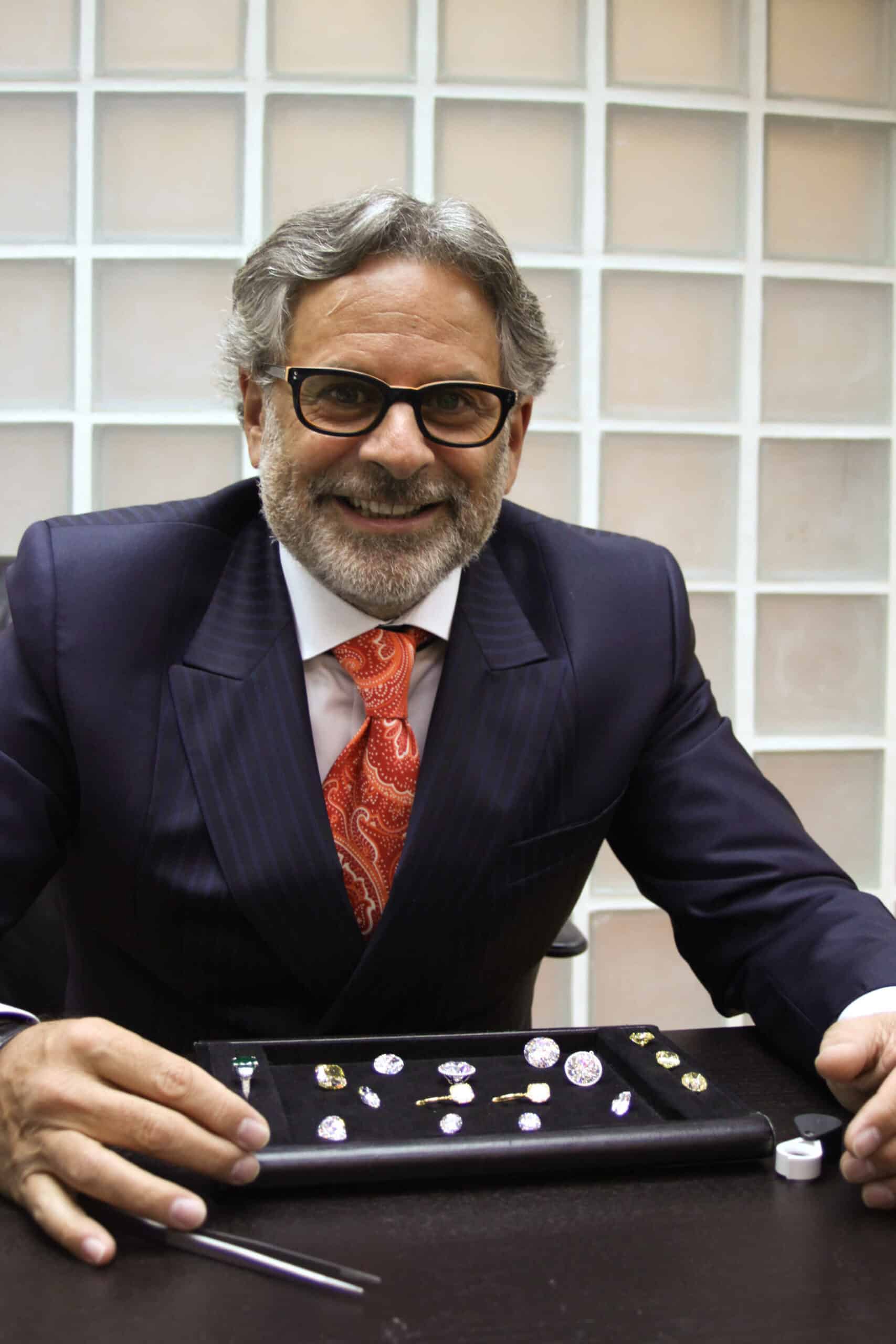
Nissan Perla, CEO of Diamond Registry, emphasizes the importance of understanding the nuances of diamond quality and pricing.
According to Perla, the most helpful thing a buyer can do to get the best bang for their buck is to avoid diamonds with unclear or dubious certifications and only go for GIA-certified diamonds. Diamonds with no reputable certifications have a large risk of being misrepresented in terms of quality and value.
Additionally, Perla suggests focusing on the overall beauty of the diamond rather than fixating on achieving perfect scores in all the 4Cs. For instance, a diamond with slightly lower clarity but an excellent cut can appear more brilliant than a flawless diamond with a poor cut. This helps buyers find diamonds that are beautiful but still within their budget.
What we do
We do believe that an ability to purchase gemstones far lower than retail prices opens the door for everyone to the diamond industry. We work hard to make luxury affordable to everyone.
Serving this purpose, Diamond Registry became the main entrance to the diamond industry for the public interested in buying and selling gemstones. Normally, retail jewelry has many additional costs factored into the final price. Buying in a diamond shop, you pay extra for advertising and marketing, cover the expenses of running a physical store, and support the brand name.
Buying through the Diamond Registry platform, you avoid extra payment easily. You just cover the price listed in a wholesale diamond price chart.
Get A Free Price Estimation For Your Diamond
So now, after you’ve learned everything about the principles of determining the diamond cost, it’s time to check out the real price for your specific diamond! Here’s how the process works with us:
- 01
Fill our Free Quote form below to narrow the range of diamonds – for example, 3 to 3.5 carat, G to I color, VS1 or VS2, round or cushion shape. If you’re not sure, read The 4Cs guide on our website or simply leave a wide range for us to work with.
- 02
After submission, your diamond expert will source our global network of diamond cutters and merchants. There, we see which diamonds are currently available at wholesale prices and collect GIA certificates. for them. We work with GIA certificates only – unless you insist on different grading labs.
- 03
Your diamond expert will send the certificates over to you, get in touch with you personally, and walk you through available options. You can pick a diamond from this selection, or ask for more certificates, or change your range. Our diamond experts are dedicated to you personally and work with you to find the perfect diamond and make the overall process as easy as possible.
- 04
Once you’re ready, feel free to visit our offices in New York or Hong Kong. Also, you can meet our agents anywhere else in the world to see your loose diamond selection in person.
- 05
Once we found the perfect diamond and agree on its price, you have an option to work together with our jewelers on your unique design. So, you get not only the best gem but also the unique design – be that an engagement ring or a set of earrings for an anniversary.
And all this – for the best wholesale diamond price possible, saving you 50-70% off retail prices!
Diamond Wholesale and Retail Prices
When you are buying a diamond, where you buy it can significantly impact the price you pay. Often, people just look at the carat size to determine how much a diamond should cost, but there’s more to consider.
Diamonds usually start with wholesalers, who buy them in large quantities. These wholesalers then sell the diamonds to retailers, who add their own markup to the price. This markup covers various business costs, including rent, staff, and other expenses, and provides a profit for the retailer.
The markup can vary widely, ranging from 30% to 100% of the wholesale price. For example, if a diamond costs $5,000 from a wholesaler, the retail price could be between $7,500 and $10,000.
Understanding this difference helps you know why diamonds might be priced higher in stores. Retail prices reflect not just the diamond itself but also the additional costs associated with running a store and providing customer service. So, knowing about these pricing structures can help you make a more informed choice when buying a diamond.
How to Get Closer to Wholesale Prices
If you are looking to get as close to wholesale diamond prices as possible without actually buying wholesale, here are some tips to help you save money:
- Choose a Slightly Lower Carat Weight: Diamonds priced per carat can jump at whole and half-carat sizes. For example, selecting a diamond that is 0.9 carats instead of a full 1 carat can be much more affordable while looking nearly the same size to the eye.
- Pick Near-Colorless Diamonds: Diamonds in the G-J color range are nearly colorless and cost less than those in the D-F range. Pairing these with settings made from white gold or platinum can make them appear just as brilliant.
- Focus on the Cut: A diamond’s cut affects how much it sparkles. Even if a diamond has slightly lower clarity, an excellent or very good cut can make it shine brightly. So, prioritize getting a diamond with a great cut over perfect clarity.
- Consider Different Shapes: Round diamonds are often more expensive due to their popularity. Exploring other shapes, such as oval, pear, or marquise, can provide a unique look at a lower price per carat.
- Avoid Extra Features: Extras like fancy settings or unnecessary embellishments can inflate the price. Buying loose diamonds, which are not set in jewelry yet, can help keep costs lower.
- Shop Online: Online retailers generally have lower operating costs compared to physical stores, so they can offer better prices. Make sure to buy from well-known and certified online sellers, like those endorsed by AGS or GIA.
- Look at Lab-Grown Diamonds: Lab-grown diamonds are typically 30-40% cheaper than natural diamonds but have the same qualities. They are a smart option for those wanting to save money while still getting a beautiful gem.
Diamond Prices Frequently Asked Questions
Are diamonds expensive?
Diamonds can be expensive due to their rarity and the extensive processes required for mining and polishing. The price is influenced by the diamond’s quality (4Cs) and market demand. High-quality diamonds with excellent ratings in the 4Cs can be priced pretty steeply.
How much is 1 diamond equal to?
The worth of a single diamond depends on its carat weight, cut, color, and clarity. A 1-carat diamond can be worth anywhere from $1,800 to $5,000, for example.
Is diamond cheaper than gold?
Diamonds are usually more expensive than gold per carat. While gold prices fluctuate based on market conditions, high-quality diamonds often maintain higher value due to their rarity.
How to check diamond quality?
Diamond quality is assessed using the 4Cs: Carat, Color, Clarity, and Cut. If you’re buying a diamond, make sure it’s graded by a reputable gemological lab like GIA or AGS.
Which carat diamond is best?
The best carat weight for a diamond depends on personal preference and budget. Popular choices for engagement rings include 1-carat and 1.5-carat diamonds, which balance size and affordability while showcasing significant brilliance and presence.
Is diamond a good investment?
Diamonds can be a good investment if purchased wisely. That said, make sure you focus on high-quality stones with excellent ratings in the 4Cs, and check if they’re certified by reputable labs. Of course, don’t forget to account for market fluctuations.
Do diamonds depreciate?
Diamonds generally retain their value, but they can depreciate if market conditions change or if they are of lower quality. High-quality diamonds with excellent ratings in the 4Cs from reputable labs tend to maintain their value better over time.