|
|
|
washingtonpost.com
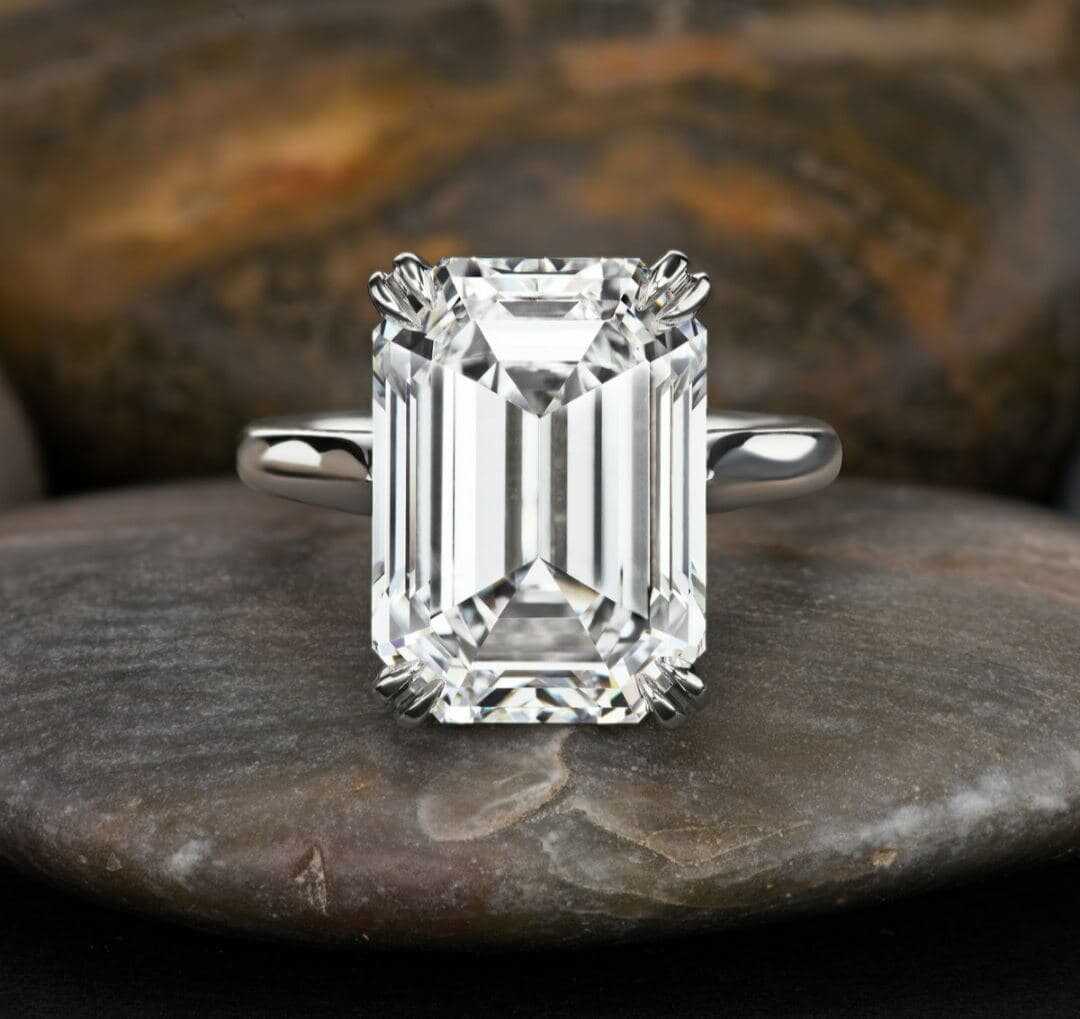
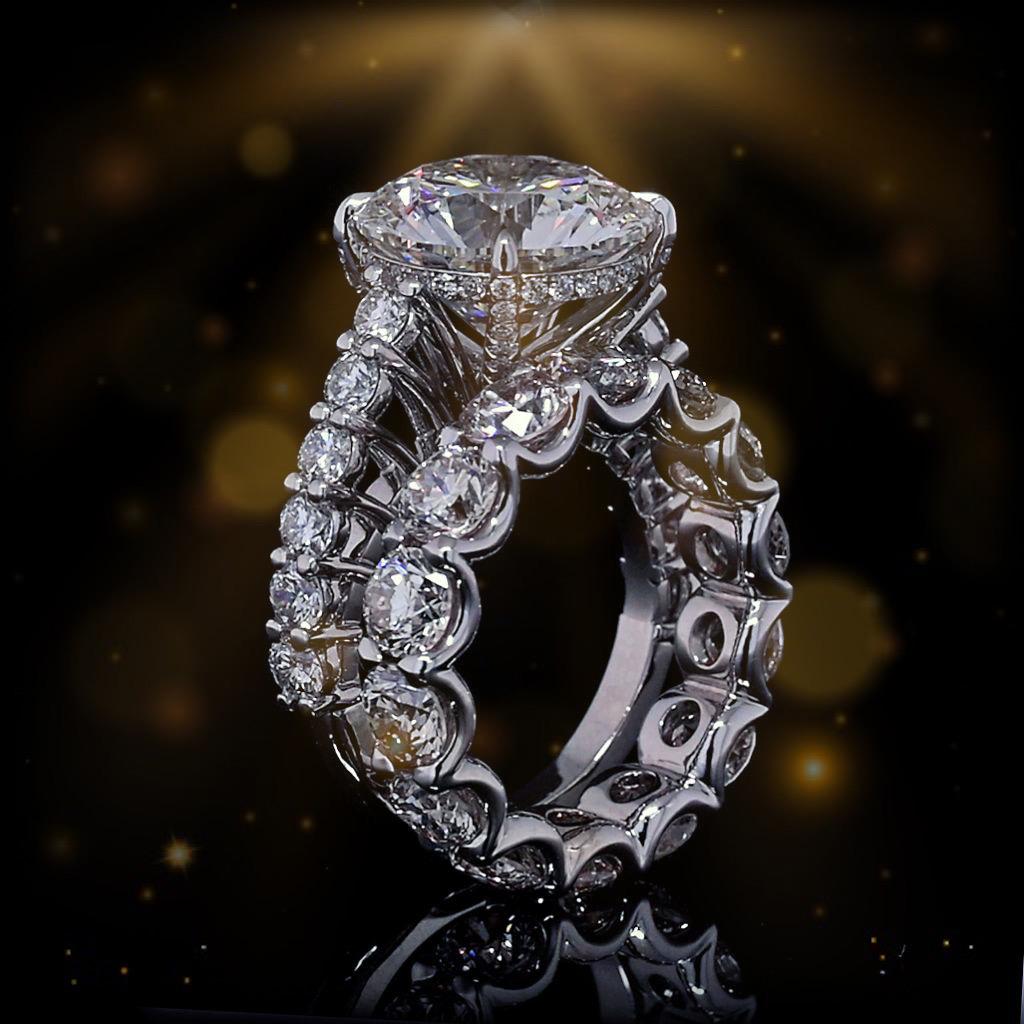
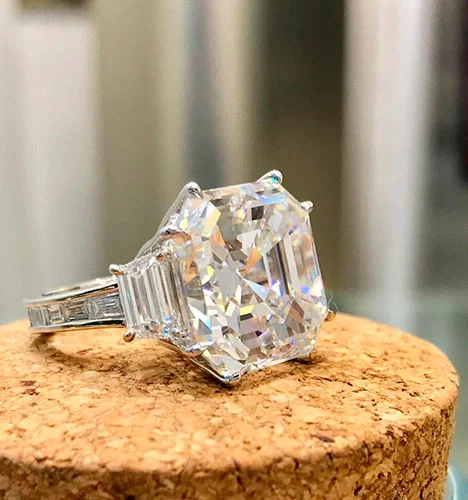
Considering A Fifth C: Cheap By Dina ElBoghdady Kevin Manley's most romantic purchase came from what even he admits is a
not-so-romantic-sounding place: Dirtcheapdiamonds.com. That online retail site is where Manley found the 1.25-carat diamond he gave
his fiancee last month. The Dirt Cheap Diamonds name embarrasses him a bit, but
the "cheap" part is what ultimately motivated him to fork over his
$5,500. Cheap is a relative term, of course, but the unset diamond was about
$2,000 less than what some conventional jewelers quoted him for what he says
were smaller, lesser-quality stones. "I shopped around because I'm the type who likes to do a lot of research
and price comparisons before I buy," said Manley, 26, of Catonsville.
"I'm convinced that I got a good value on a quality diamond." It may sound counterintuitive to make such a pricey -- and emotionally
charged -- purchase over the Internet, especially without being able to handle
the ice. And maybe that's why online sales make up a mere 2 percent of the $45
billion U.S. diamond and fine jewelry market. But as consumer confidence in the Internet grows, so does the revenue of
online jewelers. Through mid-December, online sales of jewelry and watches
totaled about $900 million, up 36 percent from a year ago and growing at nearly
twice the rate of all non-travel-related items combined, according to ComScore
Networks Inc. It's hard to know how much of that growth comes from loose diamonds and
diamond rings. But two years ago Martin Fuller, a master gemologist appraiser at Fuller
& Associates in McLean who has appraised online diamonds for Internet
companies and for customers wanting to reassure themselves, said he would get
one or two inquiries a month. "A year ago, it was one or two a week. Today
it's four or five a week, and that's conservative," added Fuller, who is a
member of the American Society of Appraisers. Odimo Inc., owner of Diamond.com and Ashford.com,
said its 2003 diamond sales more than doubled over the previous year. Rings
purchased through the design-your-own ring feature on their sites made up half
the company's revenue. Sales for the entire company, which also includes Worldofwatches.com,
totaled $50 million in 2003, up from $30 million the previous year. Blue Nile Inc. , the privately held firm that popularized the online market
for top-quality diamonds about five years ago, expects its 2003 sales will reach
$125 million, said John Baird, a company spokesman. So the fledgling company, he
said, is already posting one-seventh of the sales generated last year by the
U.S. stores of venerable Tiffany & Co. That's not huge, but no company dominates the jewelry market, Baird said. The
biggest seller of diamond jewelry in the country, Zales, owns only 3 percent to
4 percent of a highly fragmented market, he said. Tiffany, he adds, probably
accounts for another 2 percent to 3 percent of sales. Eighty-five percent are by
local jewelry stores. Michael Dell'Arciprete, Odimo's vice president of marketing, said the appeal
of the online sites is more than the discount prices. It's the ability for a
shopper to sort through thousands of diamonds quickly and to do so with
precision. Diamonds are graded with agreed-upon criteria -- the four C's,
meaning color, cut, clarity and carat. So choosing online is practically a
science, not an art, he said. "If I were to buy an antique vase over the Internet, how do I compare it
to any other antique vase?" Dell'Arciprete said. "But buying a diamond
is so specific. This is the most-graded purchase you can make over the
Internet." For the most part, diamonds sold online come with a grading report from a
major laboratory, such as the Gemological Institute of America. Experts, and
even the major sites themselves, caution shoppers to avoid a diamond that
doesn't have such a report or one that can't be returned for a full refund
within a reasonable time period. Stones and rings are generally insured and
shipped by a trackable service, such as FedEx Corp. or United Parcel Service
Inc. The Federal Trade Commission has "not received an influx of
complaints" about online diamond sellers, one of the agency's senior
attorneys said. But consumers worried about a GIA report's authenticity can
check the report number with the organization, send the report and diamond to
GIA for inspection, or hire an appraiser. The growth of the sites has meant grumbling by some brick-and-mortar
retailers, in part because customers walk into stores demanding the prices they
spotted online, experts who track the industry said. Mark Aaron, vice president of investor relations at Tiffany, declined to
comment on the effect of online sales on the 166-year-old jeweler. But he said
Tiffany made a conscious decision not to offer diamond engagement rings online
when it launched its Web site in 1999. The site offers 2,000 other items. "We ask [customers] to come into stores," Aaron said. "We want
that person to spend time with a sales professional, to make sure they . . . are
completely and absolutely comfortable with it." But Jim Schultz, founder of Dirt Cheap Diamonds Inc., figures that
competition from online retailers must be cutting into the profit margins of
conventional jewelers. "The jewelry store can't charge $8,000 anymore for a stone you can find
on the Internet all day long for $5,000," he said. "Price is the primary reason people come to us," Schultz said.
"Every other advantage goes to the jewelry store because there you can
feel, touch, compare diamonds side by side, and drop them into a ring [setting]
to see what they look like." Schultz and other Internet sellers can price low in part because most do not
maintain retail space open to the public, and they do not pay for storage of
gemstones. They merely list diamonds available to them through dealers, which is
why some sites advertise the same stones. Schultz said he does not turn away clients who ask to visit, as Manley, the
Catonsville resident, did. But to limit visits, he does not advertise widely in
the Washington area, where he says he gets less than 5 percent of his business. Schultz discourages the "feel and touch" approach at his company,
based in Frederick, because "if I'm buying a diamond for $3,000 and selling
it for $3,200, I don't have three hours to sit here and show it to
someone." Joseph L. Schlussel, a diamond wholesaler in New York, thinks a one-on-one
relationship is important in diamond sales, but he is hedging his bets. His
site, Diamondregistry.com, designed for
selling to diamond dealers and brick-and-mortar jewelers, now also sells to
individuals. Schlussel says he does not want to compete with his retailers, but he points
out that the traditional diamond pipeline has sprung leaks. In the past,
DeBeers, the mining and marketing company that controls about 60 percent of the
rough-diamond market, would sell diamonds to about 200 dealers, who would
redistribute them to cutters. The cutters sent them to wholesalers, who then
would then sell them to retailers, Schlussel said. But now DeBeers has opened stores in London and Tokyo, selling polished
diamonds, and wholesalers like himself have launched retail sites, Schlussel
said. Even Wal-Mart Stores Inc. and Costco Wholesale Corp. now sell diamond
rings -- and sell them online. "I don't want to throw away business,"
he said. The appeal appears strongest for men, most of whom feel uncomfortable
in jewelry stores because they don't understand diamonds, Blue Nile's Baird
said. "They feel that asking questions exposes their ignorance, leaving
them at the mercy of commission-driven salespeople." Perhaps that's why 45 percent of men buy a diamond without research, Baird
said. "They buy the first thing they get their hands on and afterwards
they're, like, 'Wow, did I spend too much?' " Bernard Lynch of Alexandria did not want to be one of those men. Two
Saturdays of browsing the stores with his fiancee gave him an idea of her
preferences. But when it came time to buy, he went to the Internet and
researched everything from prices to the mathematical definition of
"brilliance." From Blue Nile, he purchased a 2.1-carat, GIA-certified diamond and took it
to an appraiser. "I was pretty comfortable with it," said the 34-year-old dentist.
"I was more nervous about getting engaged."
|
Home Free Diamond Price Quote Price List Industry News Satisfied Customers Buyer Checklist News Search Trade Only |