|
GIA Study Finds Many Paths to "Ideal"
The Gemological Institute of America has announced the
completion of its mathematical study on the effect of cut on the appearance of diamonds.
The study appearing in the upcoming issue of Gems & Gemology. The controversial
finding in the article is that many types of cut and varying combinations of proportions
within the cut can give equal brilliance to the so-called "ideal" cut theorized
by Tolkowski some eighty years ago.
The GIA study acknowledges many other factors in achieving
an extraordinary appearance in round diamonds, among them scintillation and brilliance.
The GIA will utilize the mathematical three-dimensional model to examine, with the most
modern technology, the various appearance factors.
The DRB contacted the American Gem Society (AGS) in order to
obtain a response to the GIA study and was told that AGS had not yet seen it. The AGS
response to this study will be interesting to watch: Will AGS, the most muscular proponent
of the "ideal" cut, change its standard in the face of a new scientific
findings or will it continue to maintain that there is only one "ideal" ? Will
it change the AGS parameter of the zero cut?
To understand what makes a diamond beautiful, the terms must
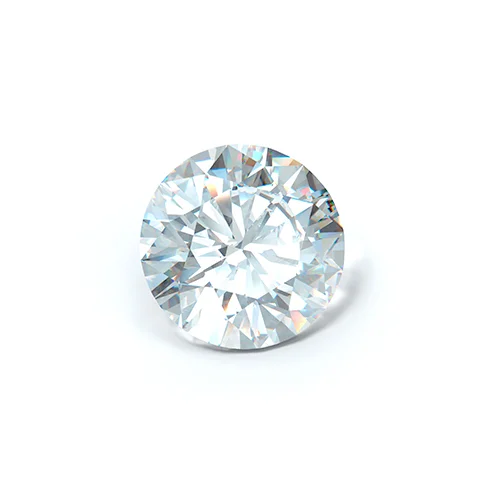
first be defined. "Beauty", in diamond terms, encompasses brilliancy (intensity
of internal and external reflections of white light to the eye from a diamond in the
face-up position) and scintillation (alternating display of reflection from the polished
facets of a gem seen by the observer as movement occurs or a lashing or twinkling of
light). One of the results of the study has been, at least for GIA, to specify even more
clearly the definitions of what is commonly termed the "brightness" of a
diamond.
Within the study, "brightness" became a calculated
numerical factor known as Weighted Light Return (WLR). According to GIA, values for WLR
were determined for more than 20,000 combinations of proportions in diamond cuts. It is
interesting to note that in one of the accompanying photos in the article, three stones
were shown. Of the three, the "ideal" cut gem was less brilliant than those with
larger tables.
Whether the GIA study will revolutionize the diamond
business remains to yet to be seen. One wonders, though whether such an all encompassing
change as this will be fought on the scientific front or as a showdown of the publicists.
Certainly, jewelers and consumers alike should read the articles and consider the issues,
but in the final analysis beauty is always defined by the eyes of the individual customer.
v
|