The Diamond Registry Selecting the best values for dealers and consumers since 1961

Since 1961

Diamond Registry Home Page
Free Diamond Price Quotes
Diamond Price List
Diamonds In The News - Diamond Registry Bulletin News Excerpts
Diamond Registry Satisfied Customers
Special For The Diamond Trade
Diamond Buyers Checklist
Search The Diamond Registy News Archive
Diamond Registry Guest Book


Champagne colored diamonds find new market

By Miles Z. Epstein - Summer 1998

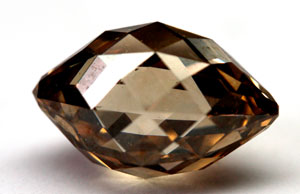
Two prominent designers with whom we spoke say they are using less champagne diamonds. Argyle Diamonds of Perth, Australia seems to be selling a lot of them. The big question: Where are all those champagne (brown) diamonds going?

Indo-Argyle Diamond Council (IADC) CEO Marty Hurwitz says "America is the biggest market for colored diamonds including champagnes. Argyle’s marketing campaign in the early 90s introduced U.S. consumers to the product and created a demand."

Market research led to the brand name champagne diamonds to describe the dark, rich colored diamonds that were mined with their white diamond cousins. In 1992, Argyle sponsored a range of promotional and advertising programs including a design contest with a $250,000 prize to increase awareness for the colored diamonds. The result — the colored diamond recognition figures from surveys went from 6% to 90%.

Big name designers such as NY-based Michael Bondanza and Arizona-based Cornelis Hollander were then using the stones in their popular designs. Argyle couldn’t have asked for a better showcase for the champagnes. Today, neither designer uses many brown diamonds. Their customers just don’t ask for them, they say.

IADC’s Hurwitz says that’s the way Argyle planned it. "We introduced the champagnes with high-end designers to get the public interested, and the large supply of small champagnes and their price points made the market shift to small manufacturers and mass-market jewelry from India. About 90% of champagnes get cut in India where manual labor is cheap and wind up in foreign-made jewelry sold here in the United States."

The fact that designers may not be using as many champagnes is fine with us, adds Hurwitz. "We have found a new market for them without actually doing anything. We just stopped promoting them and a market developed on its own. The lack of big champagnes of quality has also moved some designers to avoid small champagne diamonds." But many individual jewelers find it profitable to sell larger champagne and cognac diamonds C4-C7 on the Argyle scale as a means of avoiding the profit squeeze now inherent in colorless diamonds.

"In 1994, Argyle made the decision to shift its promotional strategy from the product-focused "Champagne Diamond" campaign, to a more broad-based trade support program focusing on a wider cross section of the product produced from the Argyle mine," says Andrew Wagstaff, manager of marketing strategy and support for Argyle. "The IADC was formed as the primary vehicle through which this support work would be managed. As such, Argyle discontinued its US trade monitoring of champagne diamonds in 1993.

"Since then, Argyle has observed that some US retailers have built a very successful niche market around the champagne diamond product. They tend to be a specialty item sold as a differentiated line based on diamond color and jewelry design."

Some designers say their customers lost interest in champagnes when Argyle stopped promoting them. Designer Cornelis Hollander explains his approach: "I certainly don’t use champagne diamonds as much as I used to." Hollander, however, still uses the champagnes on occasion, for example, as accents in his "Millennium" collection, which features celestial motif rings and pendants. "Stars, moons and planets in different sizes are made of 18k yellow and white gold, platinum and set with diamonds and other precious gemstones," explains Hollander. "The collection is accented with champagnes."

Japanese buyers have bought a number of champagne diamond pieces from Hollander, but overall Japanese purchases are way down. "Argyle needs to launch some type of consumer interest campaign to build a market for these stones because they're not hot at all," Hollander suggests. "There’s been a steady decline in interest and only consumers moved by an Argyle campaign for the champagne can bring these colored diamonds back." Hollander says that champagnes look great with platinum.

Designer Michael Bondanza, a master at fine platinum jewelry, sees the same trend. "Less and less designers are using champagnes because there is no demand for them, and good quality stones are hard to come by," he says. Both Bondanza and Hollander like pinks, and see them as potential material for upscale designs.

Full-cuts and melee champagnes have become decorations on lower-priced foreign-made jewelry rather than the prized accents of the early 90s that adorned designer pieces. Argyle keeps selling the stones and is happy the way things are.

Miles Z. Epstein is a former associate editor for

American Jewelry Manufacturer.


Contact The Diamond Registry
 
Telephone
212-575-0444
 
Postal address
580 Fifth Avenue
          New York, NY 10036
FAX
212-575-0722
Electronic mail
General Information: info1@diamondregistry.com
Jewelers Vigilance Committee     Jewelers Board of Trade
The Diamond Registry offers free diamond quotes, industry and consumer information. Originally an exclusive B2B site for the diamond industry, we are now accessible to the discerning public for retail diamond sales at diamond district wholesale prices.  The Diamond Registry offers free diamond quotes, industry and consumer information. Originally an exclusive B2B site for the diamond industry, we are now accessible to the discerning public for retail diamond sales at diamond district wholesale prices.
GIA Client Number 21835092 © Copyright 1992-2010 by Diamond Registry. All rights reserved

Home Free Diamond Price Quote Price List Industry News Satisfied Customers Buyer Checklist News Search Trade Only